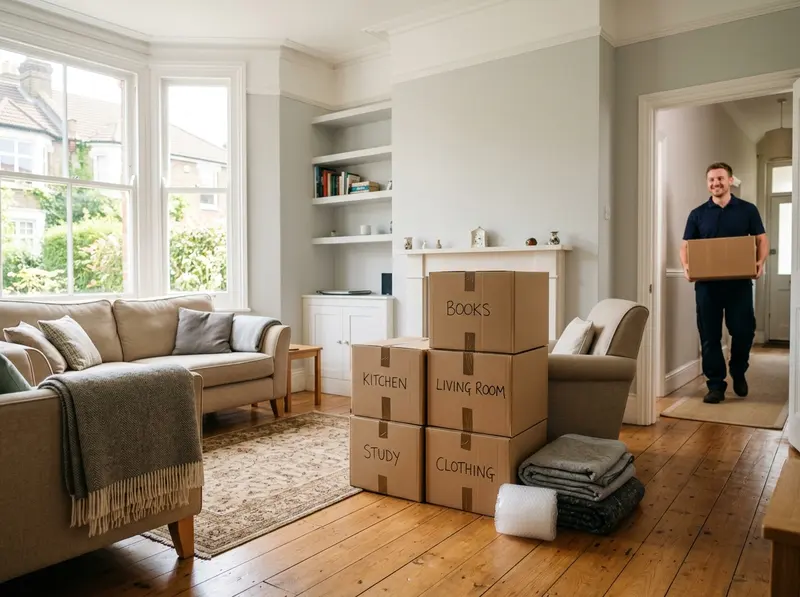
Clearing the home of someone you've lost is never easy. A gentle, practical guide to taking it at your own pace — securing what matters and knowing when to ask for help.
Clearing the home of someone you've lost is one of the hardest practical tasks anyone faces. It is rarely just about furniture and belongings — it's about memories, and about saying goodbye. There is no single right way to do it and no timetable you have to keep to. This guide is here to make the practical side a little easier, so you can focus on what matters. Take from it only what helps.
Give yourself time
There is no rush. If circumstances allow, give yourself permission to work through the home at a pace that feels manageable — a room at a time, with breaks when you need them. Many people find it easier to make a first pass for important documents and valuables, then return for the emotional task of sorting personal belongings when they feel ready.
Secure the essentials first
Before anything is cleared, it's worth doing a careful search for the things that are easy to lose and important to keep:
- Legal and financial paperwork — the will, deeds, bank statements, pensions, insurance and tax documents.
- Identity documents — passports, and birth and marriage certificates.
- Valuables and sentimental items — jewellery, photographs, letters, medals and keepsakes.
- Keys, and anything that might belong to family members or need returning.
Cash, valuables and meaningful items can turn up in unexpected places — inside books, drawers, pockets and the backs of cupboards — which is one reason an unhurried, careful clearance matters so much.
Involve the family
Where there's more than one person involved, it can help to let family members say what they would like to keep before sorting begins. Dividing belongings can be emotional, and a little planning — and patience — goes a long way. If a professional clearance is booked, a good team will always set aside anything you've identified rather than assume.
Understanding probate
If the estate is going through probate, you may need to wait for certain steps to be completed, and it can help to keep a simple record or photographs of higher-value items for the estate's accounts. A solicitor or the executor can advise on timing. A clearance company experienced in probate work — as we are — can coordinate around solicitors and estate agents and work to the timescales you're given.
We treat every home as if it were a member of our own family's — with patience, discretion and care.
When you'd like a hand
Many families reach a point where doing it all themselves simply feels like too much, and that's nothing to feel guilty about. A compassionate, experienced clearance team can take on the heavy lifting — quietly, respectfully and at your pace — while making sure anything of value or meaning is kept safe for you. If and when you'd like that support, we're here seven days a week, with no pressure and no obligation.